


Some people are part of your life, whether you want them there or not. What if you don't have the
warmest of feelings for your boss? Your mother-in-law? Your next-door neighbor?
It’s easy to come up with a mental catalog of all the ways in which that person could change to be less annoying,
domineering, passive-aggressive, arrogant, etc.but the fact is, you can't change anyone but yourself.
Here are some tips about how to help yourself cultivate more friendly feelings. Its quite a strain to hide feelings of dislike;
if you can manage to change your feelings, you'll be much happier. It hard, but not impossible.

1. Seek contact. This is a bit counter-intuitive. If you don't like someone, you probably feel like avoiding that person,
but because of the psychological phenomenon known as the mere exposure effect,
we tend to like people better the more we see them.
2. Do nice things for that person. We prefer to see those to whom we do good than those
who do good to us, as La Rochefoucauld observed.
3. Give that person a brief touch. Subliminal touching, i.e., touching a person so unobtrusively that it's not noticed,
increases people's sense of well-being and positive feelings.
4. Lighten up. Joke about whatever annoys you, and if you can manage it, laugh about it with that person,
or poke fun at your own reaction. Nothing neutralizes bad feelings like a good laugh.
This can be tough, however.
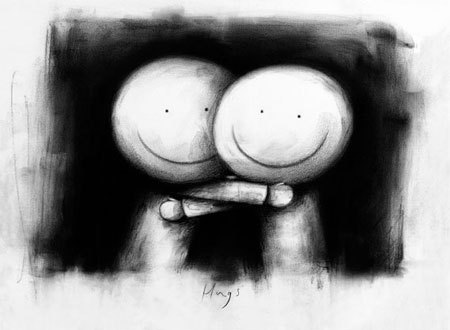
5. Act friendly. We think we act because of the way we feel, but often we feel because of the way we act.
So act the way you want to feel. This is uncannily effective just try it.
6. Resist criticizing that person. When you voice your complaints, they assume a solidity in your mind that's hard to eliminate.
When your thoughts remain unspoken, they can more easily be changed.
7. Remember happy shared experiences. Recalling good times elevates mood and will help warm your feelings.
8. Be grateful. Reflecting on reasons to feel grateful, instead of reasons to be angry or annoyed, will help change your view.
Shab's Comments: Hope these tips will be much helpful to you all as i do practice whenever its necessary...


The Question of Hijab: Suppression Or Liberation?
The word "Hijab" comes from the Arabic word "hajaba" meaning to hide from view or conceal. In the present time, the context of Hijab is the modest covering of a Muslim woman. The question now is what is the extent of the covering? The Quran says:
"Say to the believing man that they should lower their gaze and guard their modesty; that will make for greater purity for them; and Allah is well acquainted with all that they do. And say to the believing women that they should lower their gaze and guard their modesty; and that they should not display their beauty and ornaments except what must ordinarily appear thereof; that they should draw their veils over their bosoms and not display their beauty except to their husbands..." [Noble Quran 24:30-31]
These verses from the Quran contain two main injunctions:
The following is a Tradition of the Prophet:
"Ayshah reported that Asma' the daughter of Abu Bakr came to the Messenger of Allah (peace and blessings be upon him) while wearing thin clothing. He approached her and said: 'O Asma'! When a girl reaches the menstrual age, it is not properthat anything should remain exposed except this and this. He pointed to theface and hands." [Abu Dawud]
The second requirement is looseness. The clothing must be loose enough so as not to describe the shape of the woman's body. One desirable way to hide the shape of the body is to wear a cloak over other clothes. However, if the clothing is loose enough, an outer garment is not necessary. Thickness is the third requirement. The clothing must be thick enough so as not to show the color of the skin it covers or the shape of the body. The Prophet Muhammad (peace and blessings be upon him) stated that in later generations of his Ummah there would be
"women who would be dressed but naked and on top of their heads (what looks like) camel humps. Curse them for they are truly cursed." [Muslim]
Another requirement is an over-all dignified appearance. The clothing should not attract men's attention to the woman. It should not be shiny and flashy so that everyone notices the dress and the woman. In addition there are other requirements:
Women must not dress so as to appear as men.
"Ibn Abbas narrated: 'The Prophet (peace and blessings be upon him) cursed the men who appear like women and the women who appear like men.'" [Bukhari]
Women should not dress in a way similar to the unbelievers.
The clothing should be modest, not excessively fancy and also not excessively ragged to gain others admiration or sympathy.
Often forgotten is the fact that modern Western dress is a new invention. Looking at the clothing of women as recently as seventy years ago, we see clothing similar to Hijab. These active and hard-working women of the West were not inhibited by their clothing which consisted of long, full dresses and various types of head covering. Muslim women who wear Hijab do not find it impractical or interfering with their activities in all levels and walks of life. Hijab is not merely a covering dress but more importantly, it is behavior, manners, speech and appearance in public. Dress is only one facet of the total being. The basic requirement of the Muslim woman's dress apply to the Muslim man's clothing with the difference being mainly in degree. Modesty requires that the area between the navel and the knee be covered in front of all people except the wife. The clothing of men should not be like the dress of women, nor should it be tight or provocative. A Muslim should dress to show his identity as a Muslim. Men are not allowed to wear gold or silk. However, both are allowed for women.
For both men and women, clothing requirements are not meant to be a restriction but rather a way in which society will function in a proper, Islamic manner.
This question is one which is asked by Muslim and non-Muslim alike. For many women it is the truest test of being a Muslim.
The answer to the question is very simple - Muslim women observe HIJAB (covering the head and the body) because Allah has told them to do so.
"O Prophet, tell your wives and daughters and the believing women to draw their outer garments around them (when they go out or are among men). That is better in order that they may be known (to be Muslims) and not annoyed..." [Noble Quran 33:59]
Other secondary reasons include the requirement for modesty in both men and women. Both will then be evaluated for intelligence and skills instead of looks and sexuality. An Iranian school girl is quoted as saying, "We want to stop men from treating us like sex objects, as they have always done. We want them to ignore our appearance and to be attentive to our personalities and mind. We want them to take us seriously and treat us as equals and not just chase us around for our bodies and physical looks." A Muslim woman who covers her head is making a statement about her identity. Anyone who sees her will know that she is a Muslim and has a good moral character. Many Muslim women who cover are filled with dignity and self esteem; they are pleased to be identified as a Muslim woman. As a chaste, modest, pure woman, she does not want her sexuality to enter into interactions with men in the smallest degree. A woman who covers herself is concealing her sexuality but allowing her femininity to be brought out.
The question of Hijab for Muslim women has been a controversy for centuries and will probably continue for many more. Some learned people do not consider the subject open to discussion and consider that covering the face is required, while a majority are of the opinion that it is not required. A middle line position is taken by some who claim that the instructions are vague and open to individual discretion depending on the situation. The wives of the Prophet (peace and blessings be upon him) were required to cover their faces so that men would not think of them in sexual terms since they were the "Mothers of the Believers," but this requirement was not extended to other women.
The Virtues of Hijab1. An act of obedience.
The hijab is an act of obedience to Allah and to his prophet (peace and blessings be upon him), Allah says in the Quran:
"It is not for a believer, man or woman, when Allah and His messenger have decreed a matter that they should have an option in their decision. And whoever disobeys Allah and His Messenger (peace and blessings be upon him), has indeed strayed in a plain error." [Noble Quran 33:36]
Allah also said:
"And tell the believing women to lower their gaze (from looking at forbidden things) and protect their private parts (from illegal sexual acts, etc) and not to show off their adornment except what must (ordinarily) appear thereof, that they should draw their veils over their Juyubihinnah." [Noble Quran 24:31]
Juyubihinnah: The respected scholars from As-Salaf As-Saleh (righteous predecessors) differed whether the veil cover of the body must include the hands and face or not. Today, respected scholars say that the hands and face must be covered. Other respected scholars say it is preferable for women to cover their whole bodies.
2. The Hijab is IFFAH (Modesty).
Allah made the adherence to the hijab a manifestation for chastity and modesty. Allah says:
"O Prophet! Tell your wives and your daughters and the women of the believers to draw their cloaks (veils) over their bodies (when outdoors). That is most convenient that they should be known and not molested." [Noble Quran 33:59]
In the above Ayah there is an evidence that the recognition of the apparent beauty of the woman is harmful to her. When the cause of attraction ends, the restriction is removed. This is illustrated in the case of elderly women who may have lost every aspect of attraction. Allah made it permissible for them to lay aside their outer garments and expose their faces and hands reminding, however, that is still better for them to keep their modesty.
3. The hijab is Taharah (Purity)
Allah had shown us the hikmah (wisdom) behind the legislation of the hijab:
"And when you ask them (the Prophet's wives) for anything you want, ask them from behind a screen, that is purer for your hearts and their hearts." [Noble Quran 33:53]
The hijab makes for greater purity for the hearts of believing men and women because it screens against the desire of the heart. Without the hijab, the heart may or may not desire. That is why the heart is more pure when the sight is blocked (by hijab) and thus the prevention of fitnah (evil actions is very much manifested. The hijab cuts off the ill thoughts and the greed of the sick hearts:
"Be not soft in speech, lest he in whose heart is a disease (of hypocrisy or evil desire for adultery, etc) should be moved with desire, but speak in an honorable manner." [Noble Quran 33:32]
4. The hijab is a Shield
The prophet (peace and blessings be upon him) said: "Allah, Most High, is Heaven, is Ha'yei (Bashful), Sit'tir (Shielder). He loves Hayah' (Bashfulness) and Sitr (Shielding; Covering)." The Prophet (peace and blessings be upon him) also said: "Any woman who takes off her clothes in other than her husband's house (to show off for unlawful purposes), has broken Allah's shield upon her." The hadith demonstrates that depending upon the kind of action committed there will be either reward (if good) or punishment (if bad).
5. The hijab is Taqwah (Righteousness)
Allah says in the Quran:
"O children of Adam! We have bestowed raiment upon you to cover yourselves (screen your private parts, etc) and as an adornment. But the raiment of righteousness, that is better." [Noble Quran 7:26]
The widespread forms of dresses in the world today are mostly for show off and hardly taken as a cover and shield of the woman's body. To the believing women, however the purpose is to safeguard their bodies and cover their private parts as a manifestation of the order of Allah. It is an act of Taqwah (righteousness).
6. The hijab is Eeman (Belief or Faith)
Allah did not address His words about the hijab except to the believing women, Al-Mo'minat. In many cases in the Quran Allah refers to the "the believing women". Aisha, the wife of the prophet (peace and blessings be upon him), addressed some women from the tribe of Banu Tamim who came to visit her and had light clothes on them, they were improperly dressed: "If indeed you are believing women, then truly this is not the dress of the believing women, and if you are not believing women, then enjoy it."
7. The hijab is Hayah' (Bashfulness)
There are two authentic hadith which state: "Each religion has a morality and the morality of Islam is hayah'" AND "Bashfulness is from belief, and belief is in Al-Jannah (paradise)". The hijab fits the natural bashfulness which is a part of the nature of women.
8. The hijab is Gheerah
The hijab fits the natural feeling of Gheerah, which is intrinsic in the straight man who does not like people to look at his wife or daughters. Gheerah is a driving emotion that drives the straight man to safeguard women who are related to him from strangers. The straight MUSLIM man has Gheerah for ALL MUSLIM women In response to lust and desire, men look (with desire) at other women while they do not mind that other men do the same to their wives or daughters. The mixing of sexes and absence of hijab destroys the Gheerah in men. Islam considers Gheerah an integral part of faith. The dignity of the wife or daughter or any other Muslim woman must be highly respected and defended.
The Obligatory Conditions For An Islamic Hijab
1. Covering ALL Of The Body
It is an agreed position by many respected scholars that the face and hands of the woman must be covered. Some scholars say it is permissible to uncover the face and the hands of the woman as long as there is no fitnah (infatuation) caused by this action. Two things must be taken into consideration
If she is beautiful and beautifies her face and hands with external substances, or
The society around her is corrupt where men do not lower their gaze, then it is prohibited for her to uncover her face and hands.
On the authority of the wife of the prophet (peace and blessings be upon him), Umm Salamah said:
"When the verse was revealed that they should cast their outer garments over their bodies' was revealed, the women of Ansar came out as if they had crows over their heads by wearing outer garments.
2. The hijab must not be a display
The hijab itself must not be a display. Allah ordained it so as to cover the beauty of women and not for showing off. Allah says:
"And not show of their adornment except only that which is apparent." [Noble Quran 24:31].
AND
"And stay in your houses and do not display yourselves like that of the times of ignorance." [Noble Quran 33:33].
It is in no way logical that the hijab itself be a source of display.
3. The hijab must not be transparent
The purpose of wearing hijab must be achieved. In order for the hijab to be a cover, it must not be made of transparent material making the woman covered only by name, while in reality she is naked. The prophet (peace and blessings be upon him) is quoted as saying:
"In the latest part of my Ummah (nation of Muslims) there shall be women who would be naked in spite of being dressed, they have their hair high like the humps of the Bukht camel, curse them, for they are cursed. They will not enter Al-Jannah and would not even perceive its odor, although it's fragrance can be perceived from a distance of 500 years traveling by camel"
This indicates that a woman could cause herself a grave and destructive sin if she puts on a garment that is thin and transparent and which clearly shapes her body's features.
4. Hijab must be roomy, and not tight.
The hijab is a safeguard against fitnah. If it is tight, it will be descriptive of the woman's body and this violates and defeats the whole purpose of hijab.
5. The hijab must not be perfumed
On the authority of Ad-Diya' Al-Maqdisi, the prophet (peace and blessings be upon him) said:
"Any woman who perfumes herself and passes by some people that they smell her scent, then she is a Zaniyah (adulteress)."
6. The hijab shouldn't resemble the dress of a man
Imam Ahmed, an-Nasa'i reported the prophet (peace and blessings be upon him) to have said:
"Women who assume the manners of men are not from us and also those of men who assume the manners of women."
Abu Hurairah narrated that: "The Prophet (peace and blessings be upon him) CURSED the man who wears the dress of a woman and the woman who wears the dress of a man."
7. The hijab must not resemble the garments of the Kuffar
Abu Dawud and Ahmed have related the prophet (peace and blessings be upon him) said:
"The one who take the similitude (manner) of a certain people, then he/she becomes one of them."
Abdullah bin Umar said: "The Prophet (peace and blessings be upon him) saw me wearing two garments dyed in saffron (orange), whereupon he said: these are the clothes (usually worn) by the Kuffar, so do not wear them."
8. The hijab should not be for fame
Abu Dawud and Ibn Majah have related the prophet to saying:
"The one who wears a garment designed for a worldly fame, Allah will make them wear a garment of humility on the Day Of Resurrection then he will be set ablaze."
The garment of fame is any garment a person wears to make themselves look famous. This applies whether the garment is highly precious and shows admiration to the life of this world or if it is chosen of a low quality to show lack of interest to this worldly life. The person may put on clothes with distinct colors so as to draw attention, act proudly and/or arrogantly.
9. Concealed ways of display
Examining the various conditions about the hijab one can clearly recognize that many of the young Muslim women are not fulfilling these conditions. Many just take "half-way" measures, which not only mocks the community in which she lives, but also mocks the commands of Allah. They consider what they put on now wrongly as "hijab" So, O Muslims, be mindful to Allah and His Messenger (peace and blessings be upon him), and do not deceived by those who "bless" this action of yours and conceal their true intentions. Do not be deceived, and there is no excuse to follow the evil.
If you are sincere in achieving Al-Jannah, then be mindful of these things, Insha'Allah
The orange keeps itself within its shiny orange Hijab to protect its delicious fruit. Otherwise it-looses its taste too.
So are the banana, the coconut and the pomegranate. Each one has an elegant and unique Hijab, which protects it from disease and destruction.
The jewel of the sea, the pearl, has been given a very tough and rugged Hijab - oyster shell. It protects it from sea animals and keeps it sparkling and shining inside.
However, the most beloved of Allah in all His creation is the Muslim girl who wears the Hijab. She knows it is a gift from Allah. It protects her from harm, injury and mischief. She wears it knowing it gives her dignity, beauty and respect. So precious she can be that she hides herself beneath her Hijab.
Does any women in your family wear a Hijab? Give it a try today.
Shab's Comment: Hmmm...I never thought of putting such post in my Blog. But after reading this article somewhere was forced to put in.Being a muslim i too had many doubts in my mind but now everything is clear i guess.So folks just wanted to share this knowledge with you all...


Marwadi at his best!!!
Seller: 1 Rs.

